Who Should Be Reading This?
This article is written for budtenders and consumers alike.
Myriad misunderstandings exist within the Cannacommunity, all the result of bad policies and lack of research due to lack of funding as well as lack of scientific inquisitiveness. This examination will cover several very common misconceptions about cannabis:
What We Cover Here
- Inhalation Duration – The amount of time a hit is held in the lungs.
- THC Bioavailability – The amount of THC and other cannabinoids that reach the bloodstream.
- Identification – The proper reading of product labels.
- Hybridization – The fact that the vast majority–by a wide margin–of cannabis in licensed dispensaries is hybridized.
For each of these three areas, a primary claim will be made; this will be followed up by looking at three segments: Misconception, Analysis, and a Refutation and/or affirmation. Let’s get at it!
Inhalation Duration
Inhalation Duration refers to the length of ones breathold while smoking cannabis. This is known formally as Breath-Hold-Time or BHT. Current research has the ideal duration to be anywhere from 3-7 seconds. Despite this, some folks are insistent that longer BHT = higher high. Let’s take a look briefly
- Misconception: Some (literally millions of) cannabis consumers believe that holding in the smoke longer after inhaling will result in a stronger or longer-lasting high; in this particular case, this is both the claim and the misconception. So what do peer-reviewed academic research studies have to say about that?
- Analysis: Research shows that the duration of inhalation does not significantly impact the intensity or duration of the high. Read differently, combined with bioavailability, a higher BHT is just wasting your weed (more on that later). There is one thing a longer BHT is good for doing: leaving behind tar. Most THC is absorbed within the first few seconds of inhaling, and prolonged breath-holding can lead to potential harm. (Azorlosa et al, 1995)
- Affirming the claim: The duration of inhalation doesn’t significantly affect the high, but a higher puff volume (PV) does. . So here’s the bottom line: it’s not the duration of inhalation, but the volume of your puffs in addition to bioavailability,
THC Absorption Limit in the Brain:
Budtenderjack says, “The brain can only absorb so much THC at any one time, depending on bioavailability, dosage, and other factors like usage history”. So is the claim valid? Let’s check it out:
- Misconception: Some cannabis consumers are unaware that there’s a limit to how much THC their brain can absorb in a short time, leading them to consume excessively. And thanks to bioavailability, we don’t even absorb what we think we are. This is, again, why THC inflation is such a big deal, and why understanding cannabis labeling is key to quality, value, and safety.
- Analysis: Studies show that the brain’s endocannabinoid receptors have a saturation point, and consuming more THC than receptors can handle does not lead to a stronger high. Instead, it may increase the risk of adverse effects.
Bioavailability & Absorption of THC/CBD
Bioavailability is simply how efficiently or how quickly a specific substance is absorbed into the body. Studies have been conducted which show that the bioavailability of inhaled THC is somewhere between 10% and 35%, .
The bioavailability of THC after smoking cannabis is estimated to be between 10% and 30%, of which the upper range is relatively high. This variability of the bioavailability can be due to factors that include the inter-individual (between different individuals) and intra-individual (different results for the same person using the same medicine at the same dose) variability of smoking dynamic, such as inhalation volume, amount, duration, and spacing of puffs (or frequency).
- Bioavailability means that anywhere between 10 and 35% of the THC, cannabinoids, and terps ultimately gets into the bloodstream. This is an enormous discrepancy, but it reflects the varied nature of drug interactions among different people*
Affirmation or Refutation: The statement, “the brain can only absorb so much THC at one given time” is valid with just the inclusion of bioavailability, not to mention inflated numbers, erroneous Budtender education (and therefore sub-par client education and recommendation); it’s crucial for consumers to be aware of this limit to avoid overconsumption and potential negative outcome with both budtenders and customers alike!
Hybridization is Standard Now!
We all have these customers, and customers always have a friend who wants only Indica or Sativa. This is fine, there’s nothing wrong with that, but there is a problem: Because growers have been crossing, back-crossing, hybridizing, and grafting cultivars for so many years now; and because there are very few, if any at all, genuine landrace strains like Durban Poison, Acapulco Red, Alaskan Thunder F***, Kush, and the Haze.
Cannabis Cultivars – Indica vs. Sativa: Budtenderjack says, “Nearly every strain you find in a licensed dispensary is hybridized in some way, shape, or fashion; this figure is probably somewhere around a minimum of 80%.” Is this a valid statement?
- Misconception: Some cannabis consumers believe that all strains are either purely indica or sativa, without recognizing that most cannabis on the market is hybridized, containing traits of both types. The terms “indica” and “sativa” are used to describe growth patterns and, to a lesser extent, effects, but they don’t always represent the genetic makeup accurately.
- Analysis: While indica and sativa are distinct subspecies of cannabis, extensive crossbreeding has led to hybrid strains with mixed characteristics.
- Solution: The statement is valid. Most cannabis strains available today are hybridized cultivars with mixed indica and sativa traits. Consumers should consider the specific cannabinoid and terpene profiles of each strain for a more accurate understanding of its effects.
Properly Reading Labels: %’s
Issue: Many cannabis consumers struggle to understand how to read product labels, leading to misunderstandings about the content and potency of different cannabinoids, particularly Total Cannabinoids vs. Total THC. When the customer cannot achieve either the desired effect or the advertised/solicited/or recommended effect, they–righteously–get angry, confused, and eventually we lose them.
Know Your Product: Read Carefully
Informed Customer → Confident & Empowered Customer → Satisfied Customer → Repeat Customer → Loyal Customer → Higher Quality of Life → More Happiness!
Budtender integrity in this area is especially key to smooth transactional experiences for the customer and the dispensary; this is why it’s incumbent on us to ensure with scrupulous effort that customers are properly educated and informed on what’s in their products. They trust grocery stores because they are informed; restaurants because they have a proven record of safety and quality. Our industry is no different. We must establish trust with our expanding clientele base, building a rapport with them based on mutual trust and awareness. By providing transparent and accurate information on labels and offering educational resources, we can empower our custuhomers to make confident and well-informed choices about their cannabis products.
For instance, some brands like E-Farms may offer strains like Gelato 41 and Wedding Cake, which contain approximately 25% Cannabinol (CBN) and similar levels of THC. Customers who don’t expect the presence of CBN might be surprised by its effects.
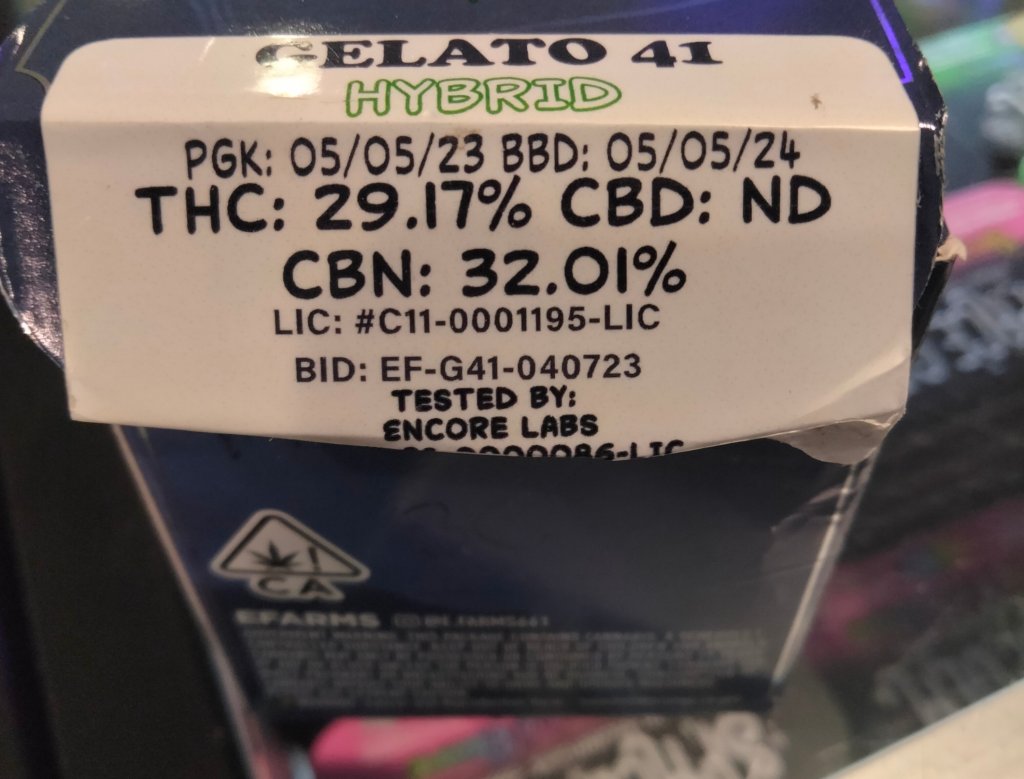
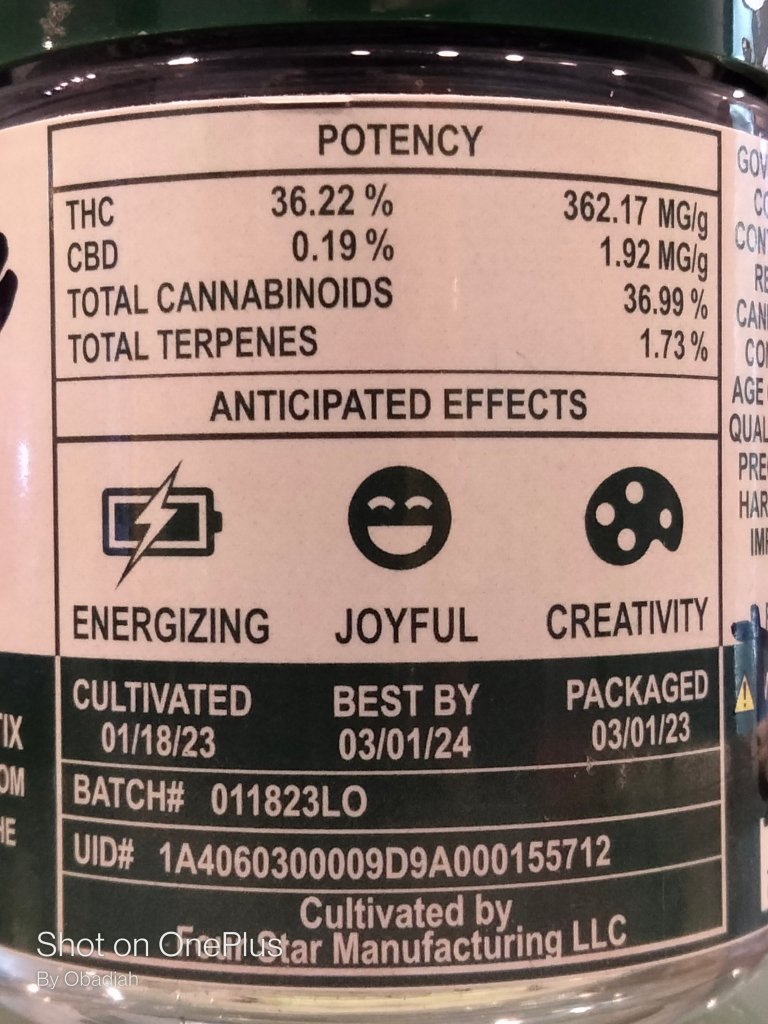
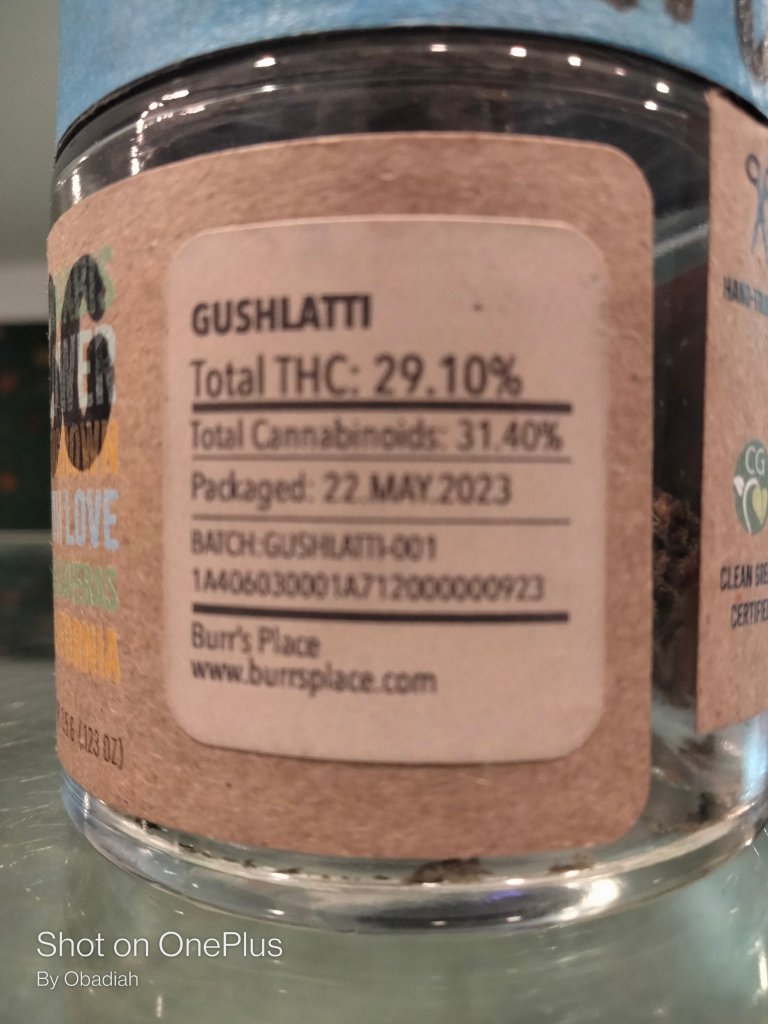
Analysis: This issue is indeed prevalent, and proper label comprehension is crucial for informed decision-making when selecting cannabis products. Total Cannabinoids represents the cumulative amount of various cannabinoids present in the product, including THC, CBD, CBN, and others. On the other hand, Total THC specifies the amount of the psychoactive compound tetrahydrocannabinol (THC) in the product.
Refutation: The statement is confirmed, as it reflects a common challenge faced by cannabis consumers. To ensure a satisfying experience, consumers should pay attention to both Total Cannabinoids and Total THC when interpreting product labels. Knowing the individual cannabinoid levels can help consumers make more informed choices based on their desired effects and potential risks associated with each cannabinoid.
Here is the proper way to read a cannabis product label:
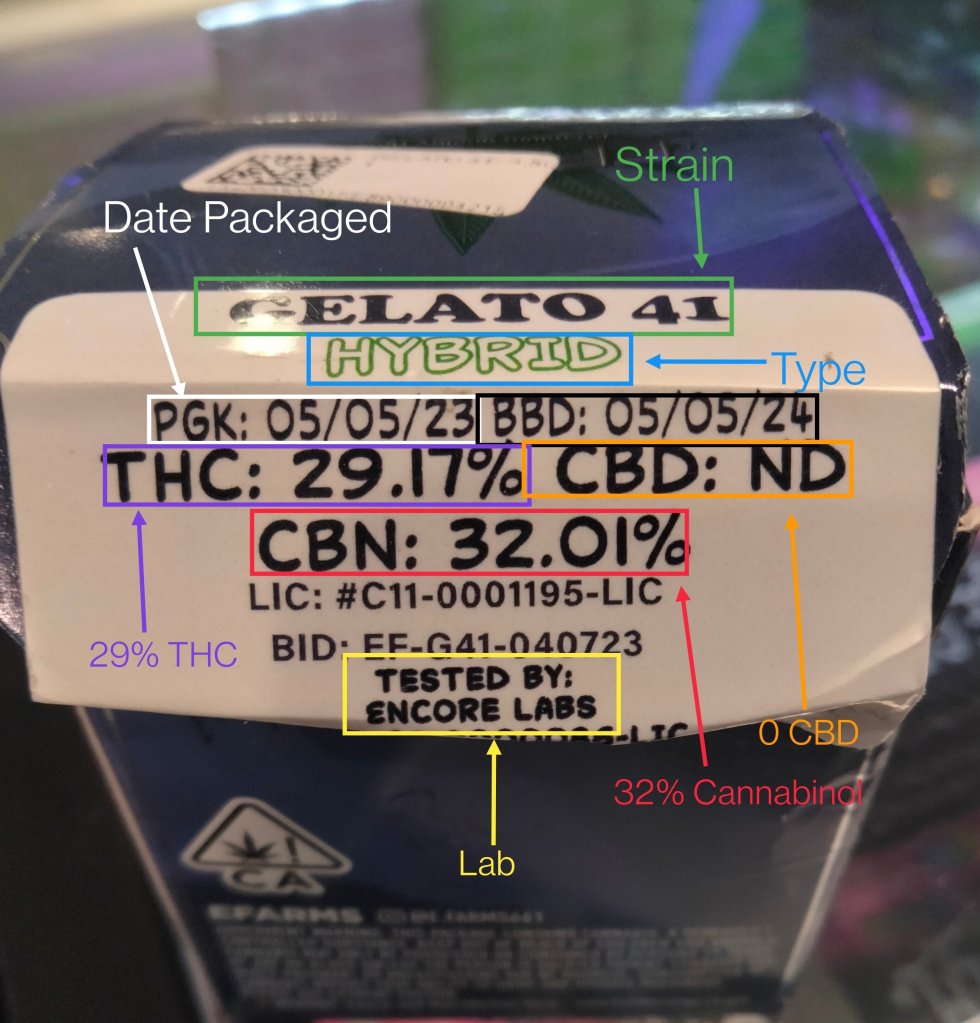
- Check the Strain Name: Look for the strain name or product description to identify the specific cannabis variety you are interested in.
- BTJ’S Recommendation: Don’t put so much stock in the name of cultivars. While these monikers can be helpful, always study their lineages to have an idea of what characteristics might be transferred from a mother or clone. (This is where we’d remember the issue about individuation and bioavailability mentioned earlier).
- Review the Total Cannabinoids: Pay attention to the Total Cannabinoids percentage, which represents the cumulative amount of various cannabinoids present in the product, including THC, CBD, CBN, and others.
- BTJ’S Recommendation: Total Cannabinoids is NOT equal to Total THC! The difference between the two figures is dictated by terpenes. Therefore, look for strains decently high in THC, but with far higher total cannabinoids. The combo of THC, other cannabinoids like CBD, CBN, CBG, etc. along with high terp levels guarantees the Entourage Effect.
- Identify Total THC Content: Check the Total THC percentage to determine the amount of the psychoactive compound tetrahydrocannabinol (THC) in the product.
- BTJ’S Recommendation: Keep in mind what you now know about bio-availability, inter-individual & intra-individual dosing differences. Everyone’s different, even when dosing and product are identical. And, very importantly, people’s consumption patterns and proclivities play a role in the uptake and effect of THC. (This is why at People’s Remedy Patterson we get to know our customers as family–we do actually love them. We meet their children, wives, husbands grandchildren, and pets; we share celebrations with them, hold them up when calamity hits. We know what our loyal VIPs like, because we know what they prefer and why. In the nearest 50 miles, there is no other dispensary providing the level of customer satisfaction, product knowledge, and value).
- Examine CBD and Other Cannabinoids: Look for specific cannabinoid percentages, such as CBD, CBN, CBG, or others, if they are listed on the label. These can provide insights into the potential effects of the product.
- Verify Terpene Profile: Some labels may include information about the product’s terpene profile, which contributes to its aroma and potential therapeutic benefits.

General Guidelines for Reading Product Labels in Other Categories
- Review Lab Testing Results: If available, check for a QR code or batch number that allows you to access lab testing results. These reports provide detailed information about the product’s cannabinoid and terpene profile, as well as tests for contaminants like pesticides and heavy metals.
- Understand THC/CBD Ratios: If the label specifies a THC/CBD ratio, understand that a higher THC ratio may lead to a more psychoactive experience, while a higher CBD ratio might provide more potential medicinal benefits.
- Check for Serving Size: Pay attention to the recommended serving size to avoid overconsumption, especially if you are new to cannabis or have a low tolerance.
- Consider Other Ingredients: For infused products like edibles or topicals, review the list of ingredients to ensure there are no allergens or additives you want to avoid.
- Review Product Warnings and Directions: Look for any product-specific warnings or usage directions to ensure safe and responsible consumption.
- Check for Brand Information: Identify the brand or cultivator providing the product. Familiarizing yourself with reputable brands can help ensure product quality and consistency.
- Ask Questions: If anything on the label is unclear or if you need further information, don’t hesitate to ask the budtender or the dispensary staff for clarification. They are there to assist you in making an informed decision.
Remember, understanding the information on the cannabis label empowers you to choose products that align with your preferences and needs while promoting a safe and enjoyable cannabis experience.

 Chronicler Cannabis Historians
Leave a comment