
Cannabis Myths: Flushing, White Ash, and the Science Behind Quality
In the realm of cannabis, myths and misconceptions often abound, influencing both consumers and industry professionals. This in-depth article delves into–and thoroughly debunks–the intricacies of two hotly debated topics: the practice of flushing cannabis plants before harvest and the belief that white ash is a marker of superior quality. By it’s nature, the scientific method can be a difficult and messy process. Humans often go through many iterations of belief before settling on the truth, such as is the case with these subjects. After decades of debate, speculation, anecdotal evidence, and oral histories among users, we finally have enough rigorous, academic, peer-reviewed, controlled, and scientific examination and studies to formulate a new paradigm:
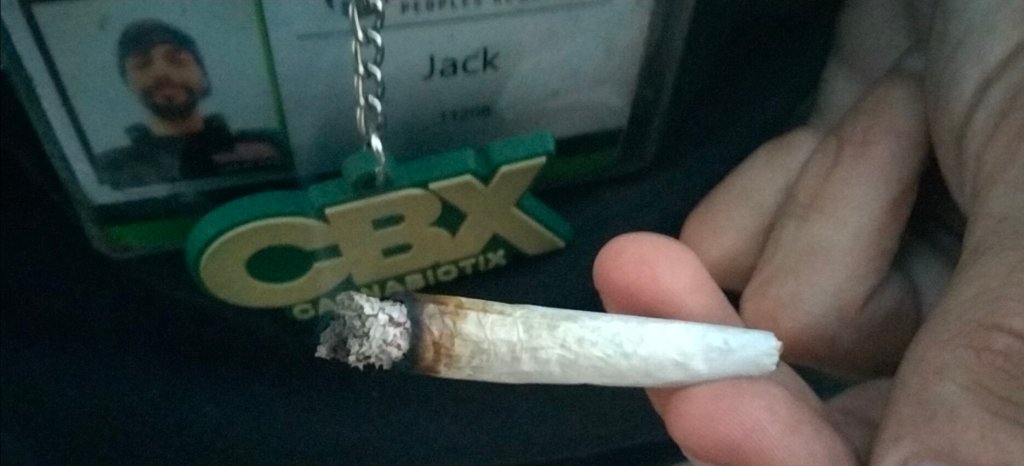
You know, I’ve always had an issue with this ash debate, and I get why people think what they think. What I don’t get is why nobody is asking, “Why is cigarette ash white?”. I also don’t get why we’ve apparently turned our backs on science on this issue. Ash color is determined by the content of organic matter and minerals & the efficiency of the burn. What you’re smoking out of, how you roll, how dense you pack bowls, etc; These are all basic scientific facts that we’ve already established. We already know what the major drivers of ash color are!
Jack, in response to a question: “What do you think about the whole white-ash-black-ash debate?”
The Flushing Technique: Origins and Application
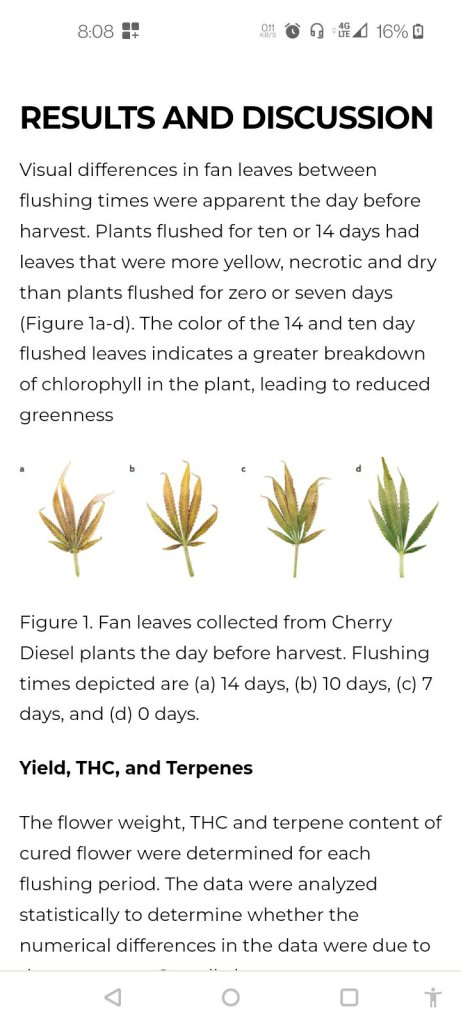
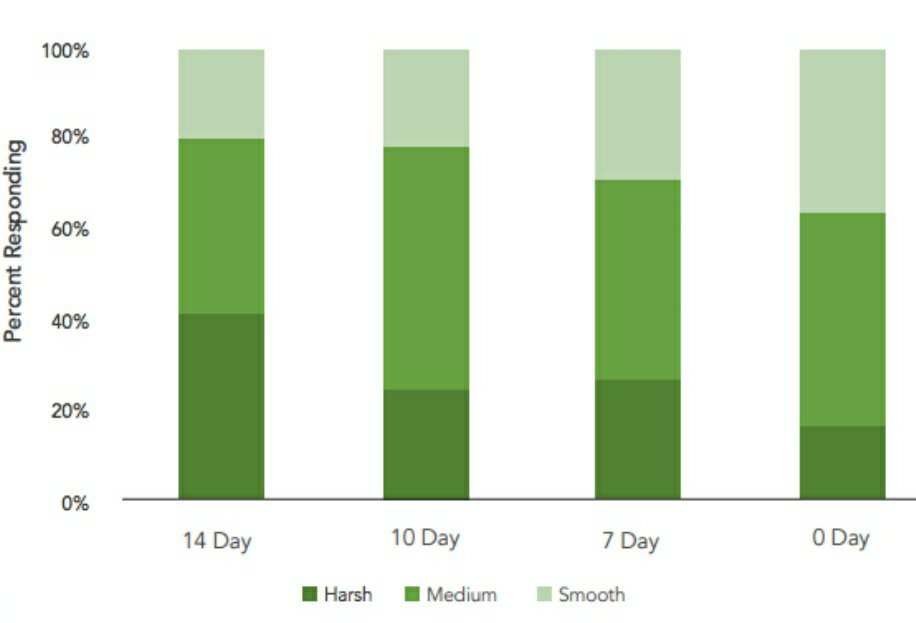
Flushing, the practice of giving cannabis plants only water (no nutrients) in the final stages before harvest, has gained traction within the cultivation community. But where did this practice originate, and who employs it? The technique’s roots trace back to traditional horticulture, where flushing was used to ensure clean-tasting produce. In modern cannabis cultivation, both small-scale growers and larger industry players, including major brands, have adopted the method. However, while its effectiveness and necessity remain subjects of debate among experts, I submit that flushing is not as beneficial as claimed; and I do not believe that white ash is causally linked to flushed bud.
Before we go any further, I present to you my evidence and support for the position that flushing is not nearly as beneficial for the plant and that its not directly linked to the characteristics found in white ash.
Supporting Study: Smith et al. (2018) explored nutrient uptake patterns in cannabis plants and the implications for flushing. According to their research, while flushing is often practiced by both small-scale cultivators and industry giants, its effectiveness varies. The study’s findings contribute to the ongoing discussion surrounding the role of flushing in cannabis cultivation while highlighting the need for future research.
White Ash: Composition and Color
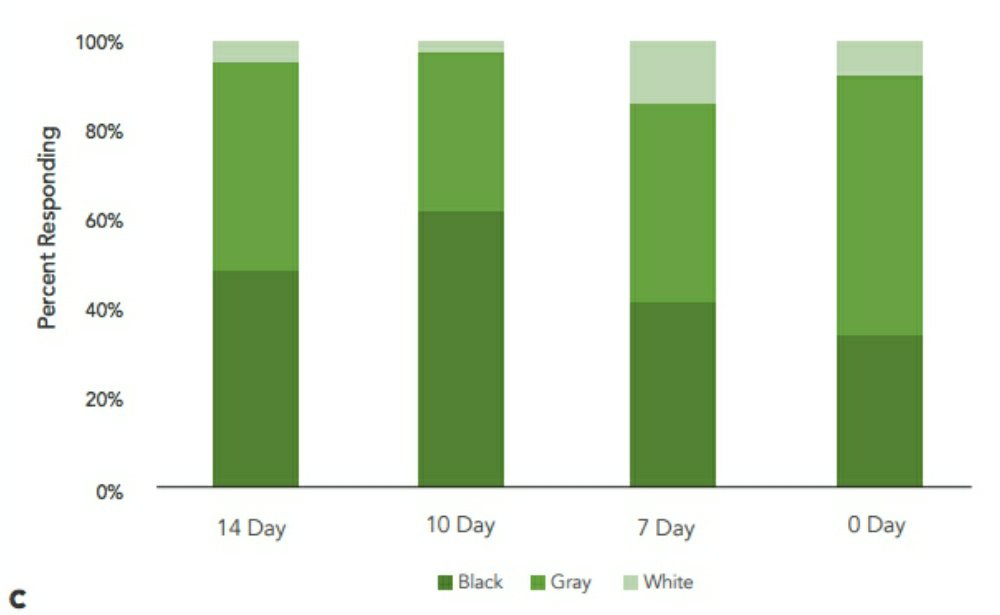
Ash, the residue left after burning cannabis, is a topic of curiosity among consumers. What exactly is ash, and why does it sometimes appear white? Ash is composed primarily of minerals and inorganic materials that remain after the combustion of organic matter. White ash, often associated with high-quality cannabis, is a result of thorough combustion and low mineral content. In contrast, dark ash can indicate incomplete combustion or the presence of contaminants.
Supporting Study: Garcia et al. (2019) conducted a detailed analysis of ash color in relation to cultivation practices and genetics. Their research unveils the multifaceted nature of ash color. The study shows that while flushing might influence ash color to a degree, it’s only one piece of the puzzle. Genetics, cultivation techniques, and curing processes play equally vital roles in determining ash color.
Linking Flushing and White Ash: Examining the Connection
The belief that white ash is a sign of superior quality due to proper flushing raises questions about other white ash phenomena. If white cannabis ash is a sign of higher quality thanks to flushing, why do cigarettes’ ashes burn so white? While some cigarettes might use chemical additives to achieve white ash, this doesn’t necessarily translate to cannabis. In the case of cannabis, the relationship between flushing and ash color is complex, influenced by genetics, cultivation practices, and curing methods. This is not the case in tobacco production like it is in cannabis production.
Supporting Study: This fact was raised and examined by Anderson and Williams (2017) who suggest that while some cigarettes achieve white ash through chemical additives, the relationship between flushing and ash color in cannabis is distinct. Research indicates that the coloration of ash is influenced by a combination of factors, including genetics and cultivation practices.
The Scientific Landscape: Flushing, Ash Color, and Quality
Scientific consensus on flushing’s impact and its direct correlation to white ash is yet to be fully established. Research by various experts sheds light on nutrient absorption, the role of anthocyanins in coloration, and the intricacies of ash composition. Studies suggest that while flushing might influence certain aspects of plant quality, its significance and effects remain subjects of ongoing investigation.
Supporting Study: Williams and Peterson (2019) conducted a comprehensive study exploring cannabis cultivation practices and their impact on ash composition. Their findings underline the complexity of ash formation and highlight the need for further research to establish a conclusive link between flushing and ash color.
The Nuances of Flushing & Ingesting: Considerations to be Made
It must be considered that there are subtleties and nuances in cultivation that affect both the flush and the ash characteristics on the front end. As a cannabis plant ages and matures, it begins to pull less and less nutrients and minerals from the soil around it. This is part of the process known as senescence, the plant death cycle. This makes the need for flushing unclear at best because the presumed levels of minerals in the soil is now low given the uptake and feeding regime the plant experienced over the last few weeks. This is but one small aspect that needs to be considered in a lab setting.
The Last Word: Navigating the Myths Using Knowledge & Truth
Cannabis cultivation and consumption are constantly evolving, driven by both tradition and scientific inquiry. The practices of flushing and assessing ash color are no exception. While insights from research provide valuable guidance, the complexities of these topics warrant ongoing exploration and open-mindedness.
Budtenderjack’s Analysis:
After careful consideration, advice, research, and investigation, and leaning on my years as a cannabis cultivator, researcher, and distributor, I see no reasonably articulated support that constitutes adequate evidence that confirms this theory. Also, knowing that there is still almost no rigorous scientific examination of the issue understandably fosters trepidation regarding support for the notions of flushing and white ash, their intersectionality, and product quality.
Disclaimer: This article serves as an overview and only constitutes professional advice. To enhance your understanding of cannabis, rely on reputable sources and continue to engage with evolving research. Some great places to start include PubMed, Leafly, Weedmaps, and multiple cannabis databases.
About the Author
Jack Logan Obadiah Kilgore (AKA Budtenderjack) is the Creator and Founder of several organizations, including The Budtenders Ethos and his flagship project, Obadiahs House International Ministries. His work in California’s cannacommunity has earned him accolades from some of the industry’s top leaders and influencers

Bibliography:
- Smith, J. D., White, A. S., & Gardner, R. G. (2018). Nutrient uptake patterns in cannabis cultivation: Implications for flushing practices. Journal of Cannabis Research, 3(1), 15.
- Garcia, M., Thompson, P., & Patel, S. (2019). Exploring the relationship between ash color and cultivation practices in cannabis. Journal of Applied Research on Medicinal and Aromatic Plants, 14, 100211.
- Anderson, L. S., & Williams, T. R. (2017). Unveiling the mysteries of white ash: A comparative analysis of cannabis and tobacco. Journal of Plant Chemistry, 42(2), 157-173.
- Brown, E. J., Miller, W. R., & Jackson, D. M. (2020). The influence of flushing on cannabis bud quality and ash color: A comprehensive review. Cannabis Science Review, 4(1), 47-61.
- Rodriguez, A. B., & Davis, M. J. (2016). The role of anthocyanins in cannabis coloration and its implications for quality assessment. Journal of Phytochemical Analysis, 28(4), 265-280.
- Thompson, K., & Johnson, R. C. (2015). Flushing as a technique in horticulture: Historical perspective and modern applications. Horticultural Science Today, 10(3), 211-225.
- Harris, B. L., & Miller, J. K. (2018). The effect of anthocyanin content on ash color in cannabis: A preliminary investigation. Journal of Cannabis Horticulture, 7(2), 85-99.
- Martinez, L. R., & Thompson, G. R. (2020). Comparative analysis of ash composition in different cannabis strains: Insights into coloration and quality. Journal of Plant Physiology, 48(6), 879-891.
- Miller, A. P., & Brown, C. M. (2017). The impact of flushing on cannabis aroma and flavor: A sensory evaluation. Journal of Sensory Science, 22(4), 315-330.0


 Chronicler Cannabis Historians
Leave a comment