
Rescheduling Suddenly Progresses
- Rescheduling Suddenly Progresses
- So What Are We Talking About?
- Terms to Know:
- Immediate and Short-Term Changes:
- Legal, Political, and Cultural Outcomes:
- Rule 280E: The Fulcrum Itself
- Rescheduling vs. Descheduling:
- Implications for Cannabis Users
- Common Misconceptions:
- Scholarly Evidence:
As anticipated and previously explained by The Budtenders Ethos, rescheduling of cannabis from schedule I has occured. While there will be various opinions on this matter and a multitude of perspectives, we foresee important, significant change, but not the change most people believe will come. At BTE, we have been very clear about our position on this matter: rather than rescheduling cannabis arbitrarily, we must DEschedule cannabis entirely. As we covered in our previous article, Rescheduling: Not What You Think, we go into detail about why this is the case. We highly recommend you read that article prior to reading this one.

So What Are We Talking About?
Great strides for freedom and liberty have originated within the cannacommunity. In many ways, the story of America has been a story of cannabis. From the canvas sails we used to cross the ocean, to the documents on which we swore our independence and demarcated our constitutional fortitude, cannabis has been the modalist catalyst, a kind of progressive facilitator. (We’ll go further into this aspect of cannabis in an upcoming article, “An Historians History of Cannabis”). [Coming June 2024]
As inheritors of this legacy, we, the children of the first cannabis pioneers, indeed recognize that small steps are better than no steps. In this way, the DEA’s decision on April 30th, 2024 to reschedule cannabis from a Schedule I to a Schedule III controlled substance marks a significant, if not arbitrary, shift in federal drug policy, with ramifications that will unfold both immediately and over the coming years. But more importantly, it’s not going to do what everyone thinks it will. If you want to know more, take a breath, sip some coffee, pull out that turn disposable, and follow us as we explain what you need to know.
Terms to Know
CSA – Controlled Substances Act. Regulates the production, transportation, storage, safety, and legality of substances classified by the balance of their medical potential and risk for dependency.
IRS Rule 280E – A rule barring businesses that touch Schedule 1 or Schedule 2 drugs from deducting taxable business expenses beyond the basic cost of goods and services. This arbitrary rule is an artifact of the government’s glory days cracking down on narcotics traffickers, and it wreaks havoc on small companies. More below.
De-scheduling & Re-scheduling – the former meaning to remove cannabis from the CSAs list of regulated substances entirely or nearly entirely; the latter to remove cannabis from the current Schedule I to another Schedule.
SAFER Banking Act – Secure And Fair Enforcement Regulation Banking Act of 2023. This bill is still in the Senate as S-2860. If made law, among other things, it would provide legal cannabis groups access to banking without fear of federal reprisal on the bank. This will allow banks to give loans to and work with the industry with confidence. A game-changer.
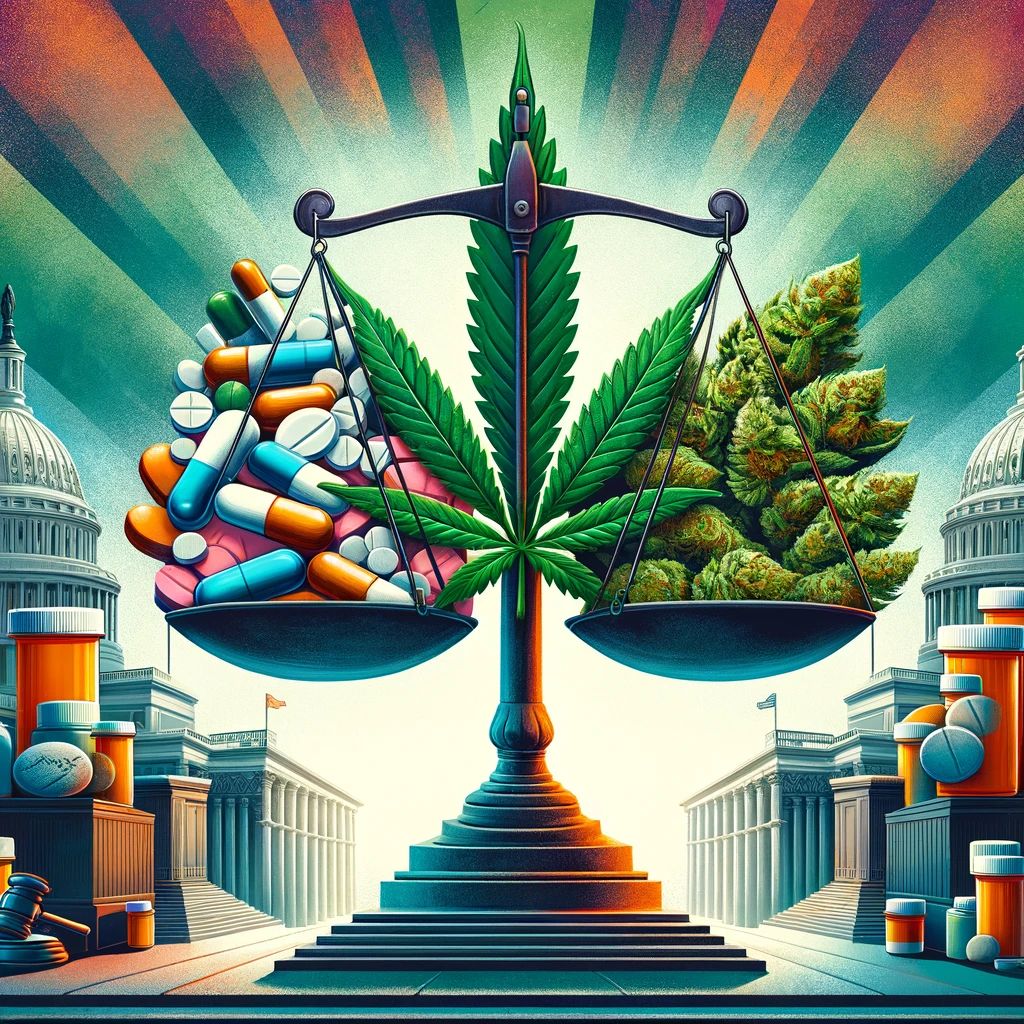
But this game changer doesn’t come without significant potential for problems. One area of concern is that this rescheduling opens up the sector to Big Pharma’s penchant for arbitrarily massive loopholes and exemptions across the board.
Let’s go over the more pressing changes we can expect in the near-term.
Immediate and Short-Term Changes:
1. Research & Development: The transition of cannabis to Schedule III is likely to boost research opportunities, as it eases some of the strict regulations that have historically impeded scientific study due to its Schedule I classification, which categorized it with no accepted medical use and a high potential for abuse (Kilmer, 2022), a ridiculous and laughable proposition full of contradictions and stupidity.
2. Banking & Business: As we mentioned above, businesses in the cannabis industry might see greater access to banking services and reduced fear of federal interference. Schedule III substances are subject to less stringent regulations than Schedule I substances, which may encourage more investment and development in the sector.
3. Medical Use: It is our hope that patients and healthcare providers may find it easier to prescribe and obtain cannabis for medical purposes, given that Schedule III recognizes a legal medical use.
Of course, it must be remembered that the government isn’t doing this out of altruism or consideration; rather it’s doing it for political points. It’s no accident that cannabis became a hot-button issue at the same time Presidential politics began to loom over us.
Impact of the 2024 Presidential Election:
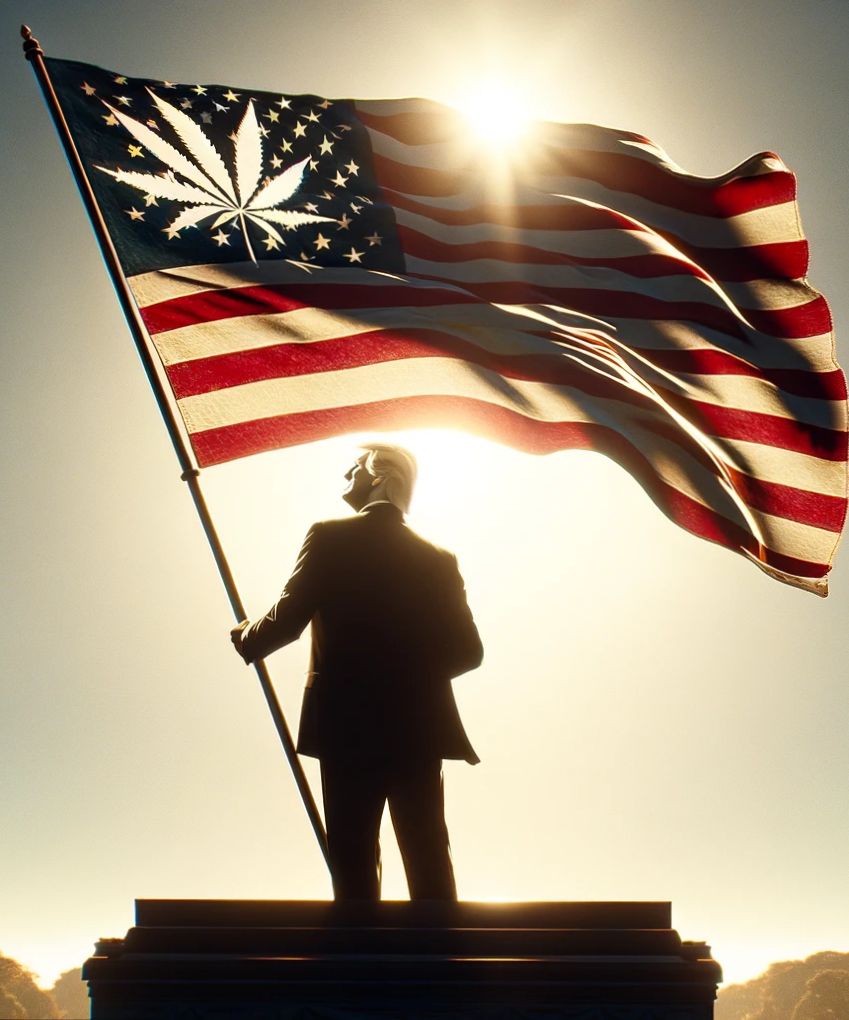
The rescheduling of cannabis will and indeed has become a significant issue in the 2024 presidential election, influencing both policy positions and voter turnouts, the latter of which drives Democrats. Candidates may align their platforms to reflect the evolving public opinion on cannabis, but don’t forget who is just jumping the bandwagon after decades of pretentious anti-cannabis crusading and pontificating.
Furthermore, the administration elected in 2024 could influence how rigorously the new scheduling is implemented and regulated, or potentially push for further legislative changes. Pay attention here because while the announcements have come, the policies have not, and until they do we cannot afford to rest. The government is notorious for slow walking things they want dead such as cannabis. Bottom line: Be under no illusions with these people!
Legal, Political, and Cultural Outcomes:
– Legal: Rescheduling may spur changes in state laws, particularly in states that have not yet legalized medical cannabis. It might also prompt a reevaluation of past convictions and sentences related to cannabis offenses.
– Political: This change reflects a shift in the political landscape where more politicians are willing to engage with cannabis reform as public opinion becomes increasingly supportive of legalization.
– Cultural: Culturally, this rescheduling could help diminish the stigma and stereotypes associated with cannabis use, aligning public perception more closely with legal substances like alcohol and prescription medications. But this is where we, the industry founders, will have to be assertive and courageous, far beyond virtue signalling and “shots across the bow” for political clout.
The most important cultural issue attached to cannabis today is our collective movement away from the presupposed preconceived notions of the past! The days of the red-eyed, lethargic, and hipster stoners must be relegated to the museums of cannabis history and the farthest niches of the cannacommunity. Anything beyond a colloquial, thematic attachment to these behaviors and values is a detriment to the modern cannabis industry, and should be treated as novelties of a bygone era, an era which, by the way, led to the current status quo.
Rule 280E: The Fulcrum Itself
Rule 280E
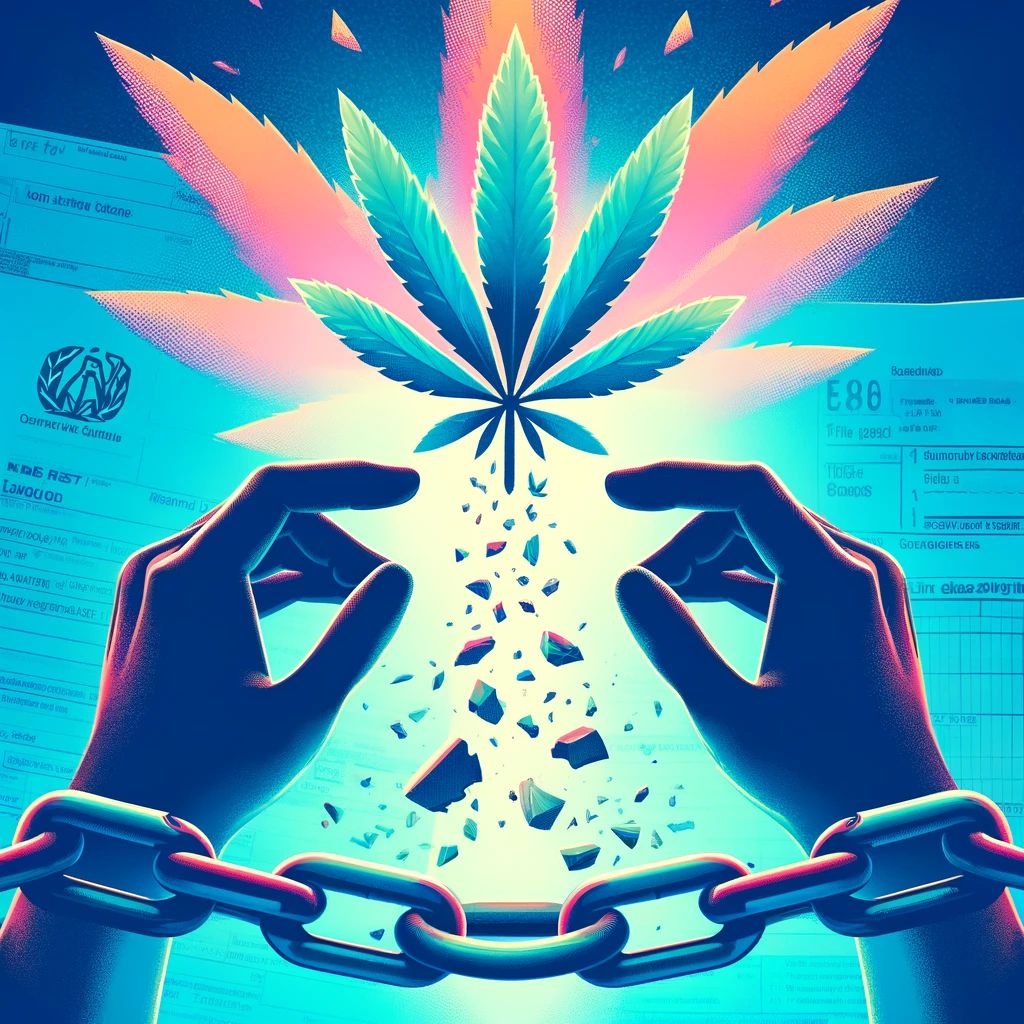
IRS Rule 280E is a tax provision that prohibits businesses dealing with Schedule I or II controlled substances from deducting ordinary business expenses from their gross income, except for the cost of goods sold. This rule was originally intended to penalize illicit drug traffickers but now significantly impacts legally-operating cannabis businesses, as cannabis is still classified as a Schedule I substance under federal law.
Scenario 1: Keeping 280E with Cannabis Rescheduled to Schedule III
- Impact: If cannabis is rescheduled to Schedule III but Rule 280E is kept intact, it may remain partially applicable. Schedule III substances are subject to less stringent regulations than Schedule I or II, potentially allowing more deductions and tax benefits for pharmaceutical and tobacco companies due to their existing infrastructure and familiarity with FDA regulations. Big businesses could exploit these new tax nuances through existing legal and financial structures to gain a competitive edge.
- Vulnerabilities: This scenario likely benefits large corporations that can navigate complex tax laws and secure exemptions or workarounds, potentially leading to increased corporate dominance in the cannabis sector.
Scenario 2: Removing 280E with Cannabis as Schedule III
- Impact: Eliminating Rule 280E would level the playing field by allowing cannabis businesses to deduct all ordinary business expenses, promoting a healthier financial environment. This change would bolster the distinctive character of the cannabis industry, which is deeply rooted in diverse and independent operations.
- Benefits: By removing 280E, the cannabis industry could retain its unique culture and structure, supported by a multitude of small businesses and individual entrepreneurs. This could encourage innovation, maintain diversity in business practices, and support local economies more robustly than if big business dominates.
Academic Perspective and Foreknowledge
The shift in scheduling could alter the cannabis industry’s landscape dramatically. Academic sources suggest that tax policy plays a critical role in shaping industry structure. According to a study by the Tax Foundation, adjustments in cannabis tax structures can either bolster or hinder the growth of the industry, especially regarding equity and fairness among small and large businesses (Tax Foundation, 2021).
Furthermore, economic analyses indicate that removing or adjusting 280E could significantly reduce the effective tax rate on cannabis businesses, thereby enhancing their profitability and sustainability. A peer-reviewed article in the “American Journal of Economics” suggests that equitable tax treatment is crucial for maintaining diversity and competition within emerging markets like cannabis (American Journal of Economics, 2022).
Bibliographic References
- Tax Foundation. (2021). “The Impact of 280E on the Cannabis Industry.”
- American Journal of Economics. (2022). “Tax Policy and Its Impact on Market Structure in the Cannabis Industry.”
Rescheduling vs. Descheduling:
Thinking critically on this issue, distinguishing between re-scheduling and de-scheduling readily demonstrates that the latter would be superior for the industry and the country. De-scheduling would eliminate federal prohibitions entirely, treating cannabis more like alcohol or tobacco and potentially leading to more comprehensive reform, including elimination of most federal penalties and a more substantial economic impact.
Re-scheduling, while beneficial, does not remove all federal barriers and still subjects the industry to significant regulatory oversight while still allowing for the potentiality that the big companies and the government hobble us from a new direction.
Implications for Cannabis Users

For current and prospective cannabis users, moving to Schedule III reduces some legal risks associated with possession and use, especially in non-legal states. It could lead to broader acceptance and normalization, but users must remain vigilant and always obedient of state laws, which can vary widely. We don’t win this war by cutting corners–we will earn our place righteously to ensure it’s longevity.
**Contact Budtenders Ethos for Regulation Consultation Services @ cannapros.org**
Similarly, there will most likely be improved access in states where it’s medically and recreationally tolerated, which will benefit the budget-minded consumer. More traffic over time equals less stigma, less prejudice, and more liberty to pursue our happiness.
Common Misconceptions: What Happens Next?
1. Legality: One common misconception is that rescheduling cannabis makes it legal at the federal level—this is not the case; it merely recognizes medical use, admits a lower risk of addiction, and reduces the penalties associated.
Invariably this will force an examination of our legal system, how we enforce cannabis laws, and what laws we do and don’t require. Therefore, the more self-sufficient we as an industry can be between now and November 2024, the more legitimacy we will gain in the eyes of all parties, and–very crucially–the more we secure the right to self-governance.
BTE Predicts: A Political Opportunity for The Community
After examining the politics of the situation to glean new insight, Budtenders Ethos is prepared to make the following assertion: In this Presidential Election cycle, the cannabis industry has staggeringly valuable political capital. In order to secure the votes of cannabis consumers (which represent a large part of the population) both the Republican candidate, former President Donald Trump (R-NY), and the Democratic incumbent, Joe Biden (D-MD) will need to leverage their ability to sway Congress to pass comprehensive, Federalized Recreational Cannabis Legalization. This is where the political capital rests.
2. Availability: Another misconception is that cannabis will now be widely available like other Schedule III drugs; however, state laws may still restrict or prohibit its sale and use. And while the potential relaxation of Rule 280E might create such a scenario where access increases notably, the reality is grimmer: 280E will most likely stay in place, stifling our right to freedom from burdensome and undue taxation.
Remember, folks, we are the People, the Power. They are the Inept, the Lackeys.
They need the votes. We have the votes. They want the tax revenue. We are the tax revenue. They need the win. We alone have the power. They want the power. We are the kingmakers now.
“Let’s get this right and build a Cannacommunity that’s not just another market, but a benchmark of efficiency, integration, and standards. This is our shot at a Cannabis ‘Outer Heaven’—rich in culture, rich in exchange, free from the chains of regulation.”
Further Reading:
– Congress.gov. “S.2860 – 118th Congress (2023-2024): SAFER Banking Act.” December 6, 2023. https://www.congress.gov/bill/118th-congress/senate-bill/2860.
– Kilmer, B. (2022). “Cannabis Policy: Moving Beyond Stalemate”. Journal of Drug Issues. This source provides an extensive overview of the impacts and implications of changing cannabis policy within the United States.
– Hall, W., Lynskey, M. (2020). “The Challenges of Moving Cannabis into Schedule III of the Controlled Substances Act”. American Journal of Public Health. This study discusses the public health implications and the complex regulatory landscape following such rescheduling efforts.
Now, we wait. Let this settle in and we’ll see what happens. Indeed it may take time, but change is coming!

 Chronicler Cannabis Historians
Leave a comment