
Recently, we drew attention to the misnomers and misinformation surrounding white ash in burning cannabis flower in our article, “The Truth About Hot White Ash“. This article serves as a follow-up to that article. So what are we talking about?
Ever notice when you pull from your blunt or joint, as the ash builds, it forms up little rings? Or how little differently-sized bubbles from in your vape oil after you hit it? Well, so did we. We asked the question, “Why are these rings and bubbles different sizes, and what does the size have to do with the performance of the pod/cart?”.
So we did some preliminary research to find out! Today we present the results. It turns out, there’s a lot to be burned through on this question because it’s a packed question. So let’s take a hit at it:
Ash Layering in Cannabis Flower Consumption
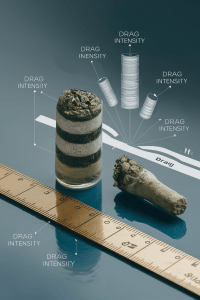
Physical Indicators of Consumption Intensity
When examining the ash produced by smoking cannabis flower, the pattern of ash layering provides a visual metric of consumption intensity. This occurs due to the differences in heat and airflow during a drag, as longer or deeper inhalations produce more intense combustion, resulting in thicker ash layers. This aspect of consumption can be studied under the principles of combustion science, where the duration and intensity of the heat impact how completely the material burns, leaving distinct residues which can provide empirical data on usage patterns (Maral et al., 2017).

That LA OG Kush 2g Blunt
Implications for Consumer Behavior
The consistency of ash layers not only indicates the combustion efficiency but also offers a feedback mechanism for consumers to adjust their smoking habits for better control over dosage and experience. This kind of observational data can aid consumers in achieving a more consistent effect from their cannabis consumption, potentially leading to a more economical and satisfying use of the product.
Air Bubble Dynamics in Cannabis Oil Consumption
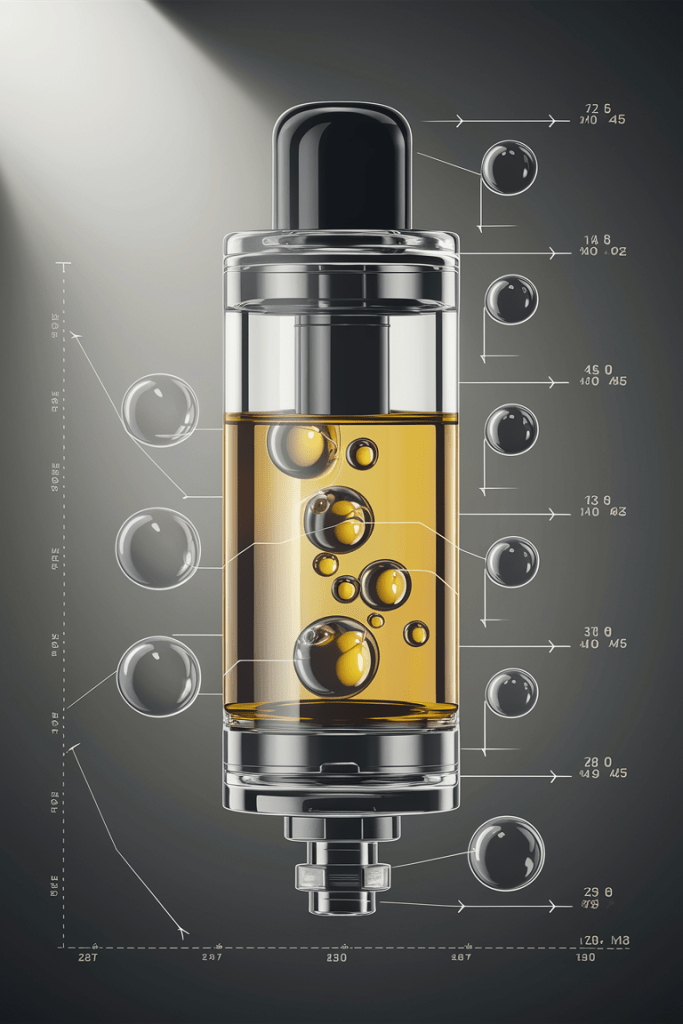
Aerosol Science & Bubble Formation
In the context of cannabis oil in pods or cartridges, the formation of air bubbles during consumption is crucial for understanding the vaporization process. According to the principles of aerosol science, the size and frequency of these bubbles can significantly influence the size of the aerosol particles created during vaporization (Hapke, 2019). The size of particles is absolutely crucial for quality vape. It’s what separates vape from smoke.
Additionally, larger bubbles, resulting from longer pulls, suggest a greater volume of air mixing with the oil, which can lead to more efficient cannabinoid release and a more potent inhalation.

Optimize for Improved Efficiency
The viscosity of the oil is a key factor in how these bubbles behave and dissolve. Tailoring the viscosity to optimize vaporization can enhance the user experience by adjusting the flow and spread of oil in the heating element, thus improving the efficiency of cannabinoid release. This will ultimately yield increased proclivity toward the full entourage effect due to better cannabinoid uptake.
Turn’s TRUtaste technology leverages the principle of resistance to modulate their heating element. So the temperature of the coil is only as hot as it needs to be for vaporization to occur, without burning the oil. This preserves the quality and flavor of the oil while maximizing potency and reducing waste.

Viscosity Variations and Bubble Dynamics
Different viscosities interact uniquely with the vaporization process. Thicker oils may produce smaller, slower-moving bubbles, while thinner oils might allow for quicker bubble movement and larger bubble formation.
This variation affects not just the visual appeal but also the practical aspect of dosage control and the predictability of the consumption experience. This will need to be addressed moving forward to achieve consistency.
Incorporating fluid dynamics into product design can help in creating cartridges that accommodate different oil viscosities more effectively, enhancing the overall functionality and appeal of cannabis oil products.
Dosing & Administration
Importance of Dosing Accuracy
Accurate dosing is essential for safe and effective cannabis consumption, particularly in medical applications.
Safety and Efficacy
The physical observations of ash and bubble formation provide practical markers that can help consumers and budtenders understand and control dosing more effectively. As a leading figure in cannabis consultancy, Jack Kilgore (Budtenderjack) emphasizes the importance of these markers in educating consumers on the safe use of cannabis products, thereby enhancing the overall user experience while ensuring safety and efficacy.
About the Author

Jack Kilgore, also known as Budtenderjack or Obadiah, is a seasoned professional in the cannabis industry, serving as a Brand Ambassador for Turn Cannabis Company and the founder of The Budtenders Ethos LLC, a premier cannabis consultancy. His extensive experience and dedication to the field are complemented by his role in founding Obadiahs House International Ministries, showcasing his commitment to community and industry alike.
@budtenderjack
budtenderjack07@gmail.com
Bibliography
– Maral, H., et al. (2017). “Characteristics of plant material combustion and ash composition.” Journal of Thermal Analysis and Calorimetry.
– Hapke, J. (2019). “Aerosol Science and Technology in Vaporization.” Aerosol Science and Technology Journal.
– Smith, J. D., et al. (2018). “Rheological Properties of Cannabinoids.” Journal of Cannabis Studies.

 Chronicler Cannabis Historians
Leave a comment