As a follow up to our previous article entitled “Op-Ed: Detriments, Nuisances & Faults in the Modern Cannabis Industry”, found HERE.
The purpose of this inquiry is to teach you about some of the more subtle, yet critical issues that we face in the industry today. You’ll recall in Part 1 we talked about the negative issues we face internally. That article highlighted the vicissitudes behind the struggles the cannacommunity faces, such as:
- Stereotypes & Prejudices
- “Stoner” mentality, lazy, uneducated.
- Failure to Readjust
- Prioritize the modern problems we face over prepping for old threats.
- Failure to recognize ones opps.
- Discernment of problems coming from outside and from within
- Toleration of Illegality
- Discarding the social contract, hobbling the industry and upending the rule of law.
This article will address additional perspectives from inside the industry. We must introspect, retool, and retry. These are incumbent upon us, the BAs and BTs.
The Industry Ethos – A Call to Action

A Season for Peace & War – Cannabis’ Surprising Parallels to Warfighting

Intriguingly, the challenges faced by the modern cannabis industry resemble the historical military struggles experienced by the Soviet Union in Afghanistan during the 1980s as well as the American military in Afghanistan 2003-2021. Both military powers entered conflicts with strategies and preparations suited for a specific but totally different era—anticipating large-scale, conventional warfare against formidable state adversaries. Instead, they found themselves in asymmetrical battles against non-traditional, agile foes requiring a completely different approach. The same sentiment can be said for the cannabis industry.
This is very much like how the Soviet Union, armed for a Cold War turned hot against America, was unprepared for the guerilla tactics of the Mujahideen (a group of fighters supported by the US CIA in a proxy war against Russia & the East).

The U.S. military, geared up for missile threats and tank battles, found itself recalibrating for counterinsurgency and urban warfare post-9/11.
Interestingly, the same is the case within the contemporary cannabis industry as it’s struggling with outdated preparations. Initially battling harsh legal restrictions and societal stigma, the industry now faces complex regulatory landscapes, rapidly shifting market dynamics, and internal ethical challenges. These new battles require nuanced strategies and adaptability, underscoring the importance of evolving with the changing landscape rather than relying on past tactics that no longer apply. Like almost everything in America, from our economics, government, and healthcare, to our social and cultural tolerance; and from our aspirations as a country to our ideals as a people, this shift mirrors the military’s evolution in response to new types of warfare, which in itself embodies the American ideal of resourcefulness, adaptability, and flexibility. All of this should embolden us to do what we do best as a civilization and a species: anticipate change and adapt quickly to fit our needs.
The path to cannabis legalization in the U.S. has been fraught with challenges. Initially criminalized by Henry Anslinger and his associates in the 1930s, cannabis legislation has historically been used as a tool for government control, infringing upon civil, cultural, and constitutional rights, including egregious violations of the 1st, 3rd, 4th, and 5th Amendments, coupled with excessive regulatory burdens and propagandistic falsehoods such as “reefer madness.”
These barriers were well recognized by both the underground and, eventually, the medical and legal recreational cannabis communities. Today, however, these obstacles have largely been overcome, transforming into legitimate challenges that include taxation, access to legal banking, and the unethical practices of some cannabis brands. Despite these shifts, the industry remains inadequately prepared to manage what are essentially normal growing pains for any emerging sector.
For more detailed historical context, sources such as Smoke Signals: A Social History of Marijuana – Medical, Recreational and Scientific* by Martin A. Lee and The Emperor Wears No Clothes by Jack Herer provide comprehensive insights into Henry Anslinger’s role and the broader impact of cannabis prohibition throughout the 20th century.
Development of new industry and its subsequent growth goes through certain, almost predictable patterns. Whether it’s regulation, social norms, or the industry itself. We have to overcome an initial social taboo imposed on us. More importantly we must stop tripping over our own feet. .
The Current State of Cannabis: Problems and Predators
The Real Enemy
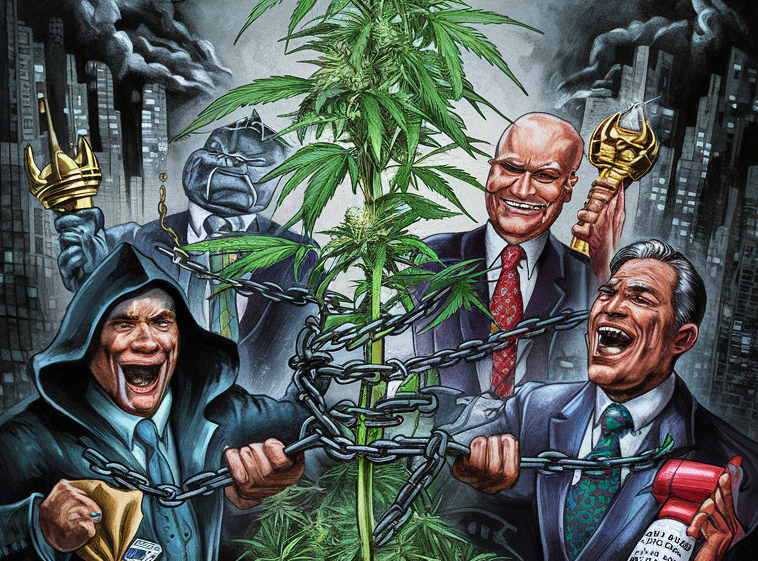
The cannabis industry’s most formidable adversaries include government bodies, lobbyists, and law enforcement agencies that persist in viewing cannabis through a lens of outdated stereotypes and legal constraints. This opposition stifles growth and innovation, pushing the industry into a defensive stance rather than one of proactive development.
The Real Obstacles
Ignorance is the bedrock of our most significant obstacles. Stereotypes, uninformed clichés, and inherent prejudices not only misrepresent our community but also hinder our progress. These obstacles perpetuate a cycle of mistrust and misunderstanding, isolating us from potential allies and resources.
The Real Problems
Our industry has struggled to distance itself from past associations and behaviors that relegated cannabis to the shadows. Failure to decisively move towards the goals and promises of the legal marketplace in California has allowed detrimental elements to persist and proliferate. Among these elements is the refusal by we, the consumers to stop embracing tropes, prejudices, and stereotypes of the baked, red-eyed, unemployed, dangerous stoner–a net loss on society.
What doesn’t help is when we reflect a culture of debauchery, foolishness, luxury, and stupidity. But make no mistake, we must–and do–refuse to lose our communal identity because it is ours alone. We will happily facilitate our own change, but we will never, ever allow (and yes, we mean allow,) the government to dictate that change to us by legislating morality. This is a Cannacommunity problem, and we will deal justice to our own kind. The way we see it, we are a sovereign nation unto ourselves that peovides its own goods, services, and accountability not because we are rewuired to, but because we consume these products ourselves and therefore take greatest care to oreserve them.
The industry doesn’t need more regulation. It needs to gain its freedom, liberty, and independence which were stolen from it decades ago.
The Symbiotes: A Cautionary Tale of Corporate Cannibalism
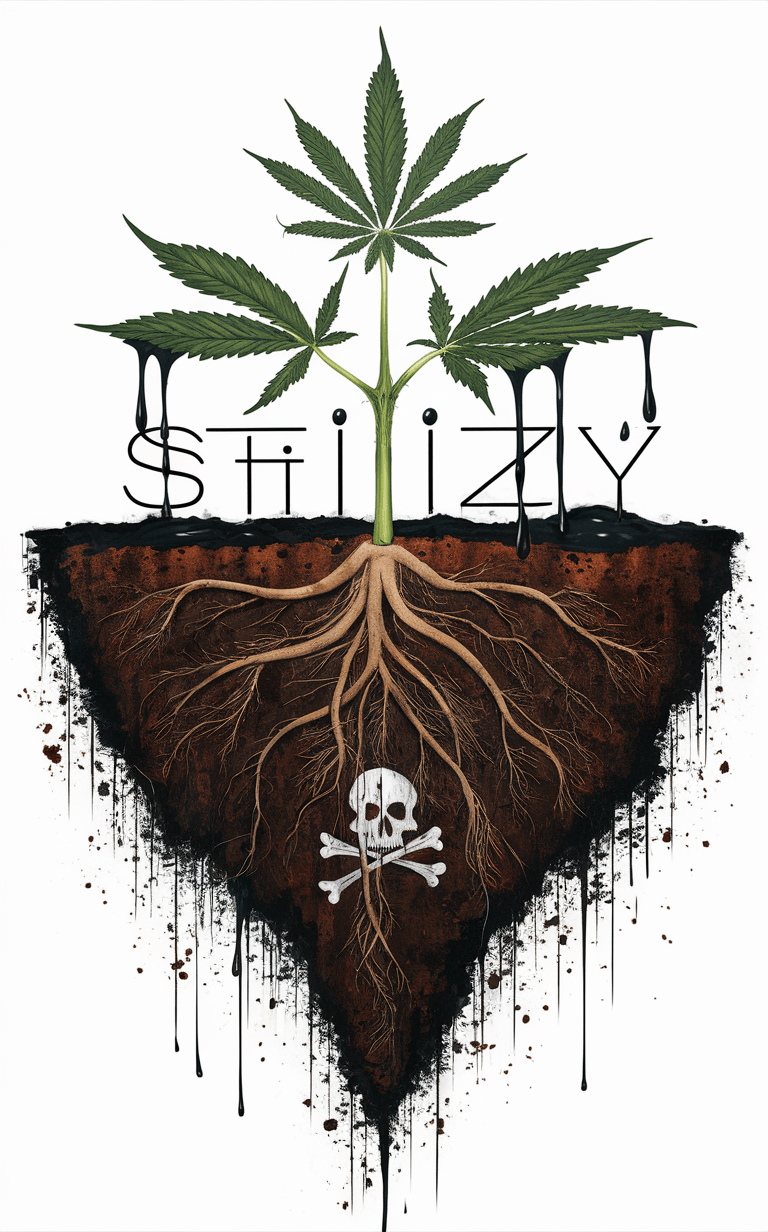
Entities like Stiiizy exemplify the dangers of a finance-first approach, draining the industry’s vitality and warping the market to their advantage. This corporate-commercial strategy not only undermines the sector’s integrity but also endangers consumers by tolerating harmful practices.
Education: The Foundation We’re Missing
The lack of comprehensive education for both budtenders and clients is eroding the industry’s foundation. Ignorance breeds vulnerability, making our community easy prey for exploitation by unscrupulous actors like State and Federal Governments.
The Cheddar-Bobs: Self-Sabotage in Action
The cannabis industry’s entanglement with illegal markets and illicit activities is a form of self-harm, undermining our legitimacy and progress. It’s critical to disentangle from such practices to ensure sustainability and integrity.
Uncle Sam’s Reluctant Guardianship
While the federal government is eager to collect taxes from cannabis businesses, it shirks the responsibility of genuine oversight and support. This half-hearted engagement leaves the industry in a precarious position, navigating a labyrinth of regulations without a clear ally in governance.
Forgetting Our Promises
The cannabis industry owes its existence to commitments made in the mid-1990s, promising to be a solution, not a problem. Yet, the journey has been marred by failures to address the black market effectively, manage tax burdens responsibly, and avoid undue influences. We must remember our founding ethos and strive to fulfill those early promises.
So What Can We Say?
The path ahead for the cannabis industry is fraught with challenges but also ripe with opportunity. To thrive, we must embrace innovation, prioritize education, and uphold our commitments to integrity and community. Only through a collective effort to adapt, innovate, and lead can we overcome the obstacles that beset us and realize the full potential of the cannabis industry. The time for action is now—let us forge a future that honors our past, secures our present, and shapes a promising horizon for all.

 Chronicler Cannabis Historians
Leave a comment