
Ending METRC: The Case for Decentralized Cannabis Distribution
Ending METRC: The Case for Decentralized Cannabis Distribution
A historian and consultant’s breakdown of how centralized tracking is crippling the industry—and what must happen next.
Table of Contents
- Introduction
- History of METRC: 2014-2025
- Gap Analysis: Where We Are vs. Where We Should Be
- Practical Pitfalls of Centralized Cannabis Regulation
- Scientific Evidence: How Overregulation Degrades Cannabis Quality
- Buyers Hubs: The Smarter Alternative
- Policy Reforms for a Thriving Cannabis Industry
- Conclusion: A Smarter Future
- About the Author
Introduction
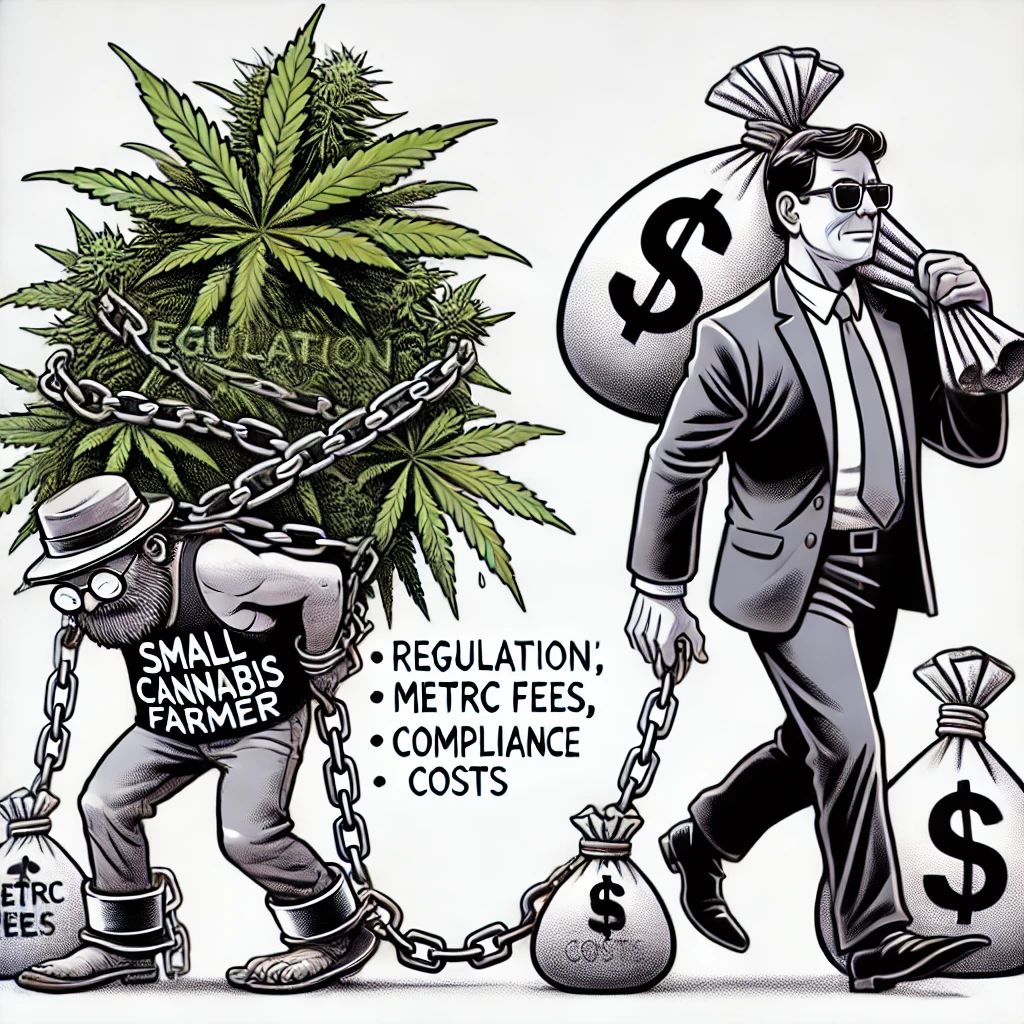
The cannabis industry was expected to bring economic prosperity, consumer choice, and free-market competition. Instead, government overreach, centralized tracking, and corporate consolidation have created an industry that is less accessible, more expensive, and needlessly complicated.
“Instead of supporting local businesses, overregulation is forcing small growers out and making it impossible for consumers to afford legal cannabis.”
With record-breaking sales in states like California, Colorado, and Michigan, one would assume that legal cannabis is thriving. However, beneath the surface, small growers are shutting down, retail shops are struggling with compliance costs, and a shadow market continues to thrive—largely due to excessive regulations like METRC.
- The origins of METRC and its unintended consequences
- How centralized tracking disproportionately affects small businesses
- Scientific evidence showing that overregulation degrades cannabis quality
- Policy alternatives that can revitalize the legal cannabis industry
History of METRC: 2014-2025
METRC (Marijuana Enforcement Tracking Reporting & Compliance) was first introduced in 2014 in Colorado as a response to concerns about diversion, tax evasion, and illicit sales. Developed by Franwell Inc., METRC was meant to be a “seed-to-sale” tracking system ensuring that every gram of legal cannabis was accounted for.
The Problem with “Seed-to-Sale” Tracking
While METRC was marketed as a tool for transparency, it quickly became apparent that the system was not designed with small businesses in mind. Instead, it created a bureaucratic nightmare that disproportionately benefited large corporate growers while punishing small-scale farmers.
How METRC Works (Click to Expand)
METRC requires every cannabis plant to be tagged with an RFID chip. Each time the plant is moved, harvested, processed, or sold, businesses must report the activity to a centralized government database. Failure to report on time or inaccuracies in data entry result in heavy fines and penalties.
Expansion and Resistance (2015-Present)
Despite its flaws, METRC was adopted by over 20 states by 2025. However, as the cannabis industry matured, states like Oklahoma, Montana, and California saw massive backlash from growers, dispensary owners, and consumers.
“Instead of stopping illicit sales, METRC has created an environment where only the largest companies can survive, driving up prices and pushing consumers back to the black market.” — Cannabis Business Owner
Gap Analysis: Where We Are vs. Where We Should Be
The Reality of the Legal Cannabis Market
Despite legalization, many states still struggle with high illicit market activity. In California, for example, an estimated 60-70% of all cannabis sales occur outside of the legal market. Why?
- METRC compliance fees drive up prices, making legal weed less competitive
- Consumers prefer fresher, deli-style cannabis that is banned under METRC rules
- Small businesses can’t afford compliance, leading to market monopolization
What a Thriving Cannabis Market Should Look Like
Instead of corporate control and centralized tracking, we should advocate for decentralized distribution models that:
- Support direct-to-dispensary sales through local buyers hubs
- Allow bulk purchasing and deli-style retail
- Focus on batch testing rather than full-chain RFID tracking
Scientific Evidence: How Overregulation Degrades Cannabis Quality
Recent studies indicate that excessive handling, pre-packaging, and prolonged storage—all mandated by METRC—significantly reduce cannabis potency and freshness.
“Extended storage in plastic packaging can lead to oxidation, terpene loss, and cannabinoid degradation.” – Journal of Agricultural and Food Chemistry
By banning deli-style dispensary models, METRC forces retailers to pre-package cannabis, leading to:
- Loss of aromatic terpenes due to plastic leaching
- Reduction in potency from oxidation
- Higher consumer costs due to excessive packaging
Conclusion: A Smarter Future
It’s time to rethink how we regulate cannabis. By moving away from centralized corporate control and bureaucratic overreach, we can create an industry that is more affordable, equitable, and consumer-friendly.
The future of cannabis is decentralized.

 Chronicler Cannabis Historians
Leave a comment