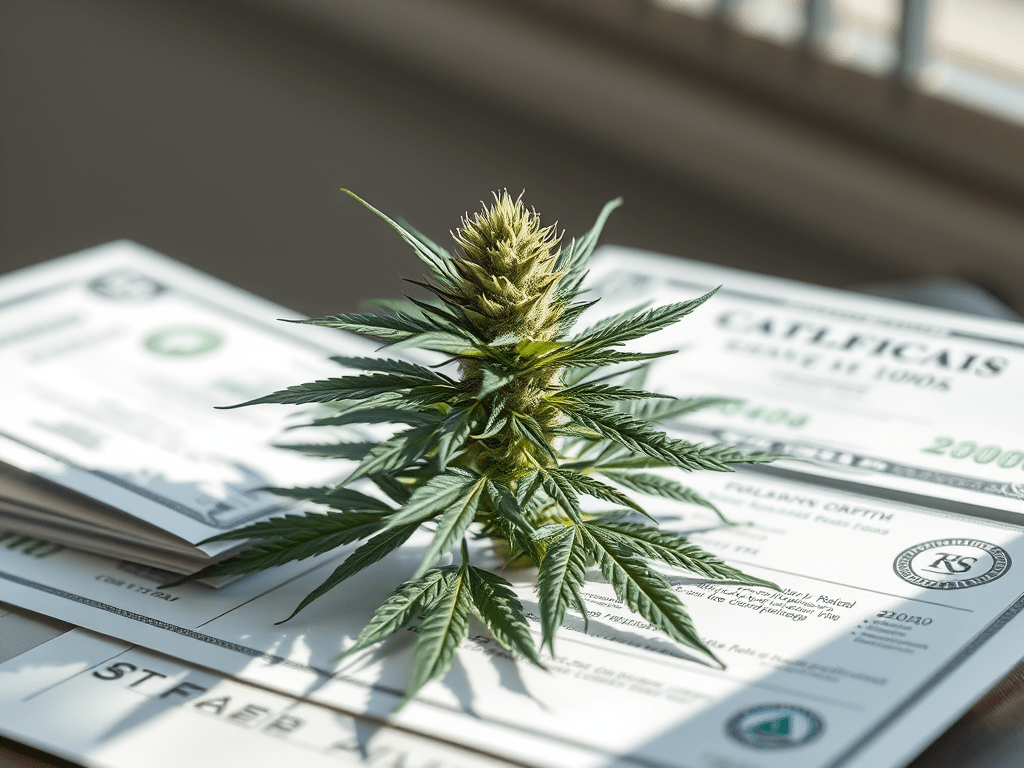
At Chronicler, we believe the cannabis industry’s future depends on one thing more than any: credibility rooted in verifiable truth. Because when someone claims a strain has “legendary lineage,” “miracle medical benefits,” or “decades of heritage,” your entire operation—brand, dispensary, and consumer trust—depends on having the documentation to back it up.
🧭 The Legal Framework: What California & Federal Law Say
DCC & MAUCRSA: Chain-of-Custody Is Mandatory
California’s Department of Cannabis Control (DCC), under the Medicinal and Adult‑Use Cannabis Regulation and Safety Act (MAUCRSA), enforces strict rules for licensed operators. Specifically, Title 4 CCR § 15706 requires a documented, secure chain-of-custody for every cannabis batch—from seed to sale—and § 26152 prohibits false or misleading marketing.
California’s False Advertising & UCL: Liability Without Intent
California’s False Advertising Act (§ 17500) and Unfair Competition Law (§§ 17200–17205) impose strict liability for misleading claims—even if there’s no intent to deceive. If a dispensary sells something with unsubstantiated claims—even unknowingly—that business can be held liable.
Federal Oversight: FDA & FTC Are Watching
Nationally, the FDA and FTC enforce accurate health‑benefit marketing. Brands making unverified therapeutic claims—think “treats anxiety,” “heals PTSD,” or even “supports immunity”—are squarely in their crosshairs.
Penalties: Not Just Fines, But Revocation & Brand Damage
Penalties range from fines to license suspension or revocation. DCC disciplinary guidelines list failure to maintain chain-of-custody (CCR § 15706) and false health statements (CCR § 17408(c)) as Tier 2 or higher offenses—meaning heavy consequences.
Why This Matters: Reputation, Compliance & Consumer Trust
“When claims go unverified, we walk a tightrope between trust and exploitation.” — Jack Kilgore
Transparent provenance strengthens consumer loyalty—especially as scrutiny grows. After all, when someone scans a QR code for batch history, they’re not just checking facts—they’re deciding whether to shop with you again.
Where It Breaks Down: Why Puffery Persists
- Historic Claim Black Box: Brands say “heritage strain” without records from breeder to product.
- Pseudoscience in Packaging: Advertised “soothes inflammation,” but no third‑party testing supports it.
- Dispensary Fallout: Retailers don’t ask for verification—or don’t know how.
Chronicler’s Approach: leveraging your narrative
We Verify It All
We check supplier records, lab results, METRC data, and packaging for accuracy—ensuring a real “origin story.”
We Coach & Build Internal Muscle
We train your team to ask the right questions, document properly, and avoid risk.
We Create Proof-Based Narratives
No fluff—just compelling stories built on fact and legacy. It’s our language.
📣 Your Next Steps
3 Things You Can Do Now:
- Audit product claims for lineage, effects, heritage. We can take care of this alongside you.
- Ask: “Can I prove this with documentation?”
- If not, reframe the claim or reach out to Chronicler.
Industry Voices
“They essentially wrecked my business… I’ve lost customers. I’m trying to right this ship as best as possible.”
— Michael Moussalli, Co-Owner, Se7enleaf
“This isn’t about fear. It’s about maturity. Cannabis brands need to step into the same accountability as food and pharma.”
— Anonymous Operator (Bay Area)
“Consumer trust in tested, regulated cannabis is the cornerstone of a successful legal marketplace.”
–Nicole Elliott, Director of CA DCC
Need more info?
- California Department of Cannabis Control. Disciplinary Guidelines. Sacramento: DCC, 2021.
- “California shutters marijuana testing lab,” MJBizDaily, April 2025.
- California Business and Professions Code §17500–17509, §17200–17205.
- California Code of Regulations Title 4, §15706, §26152.
- FDA and FTC cannabis enforcement cases, 2020–2024.
Contact us today to discover just why you need a Chronicler! Embrace Enlightenment.

 Chronicler Cannabis Historians
Leave a comment