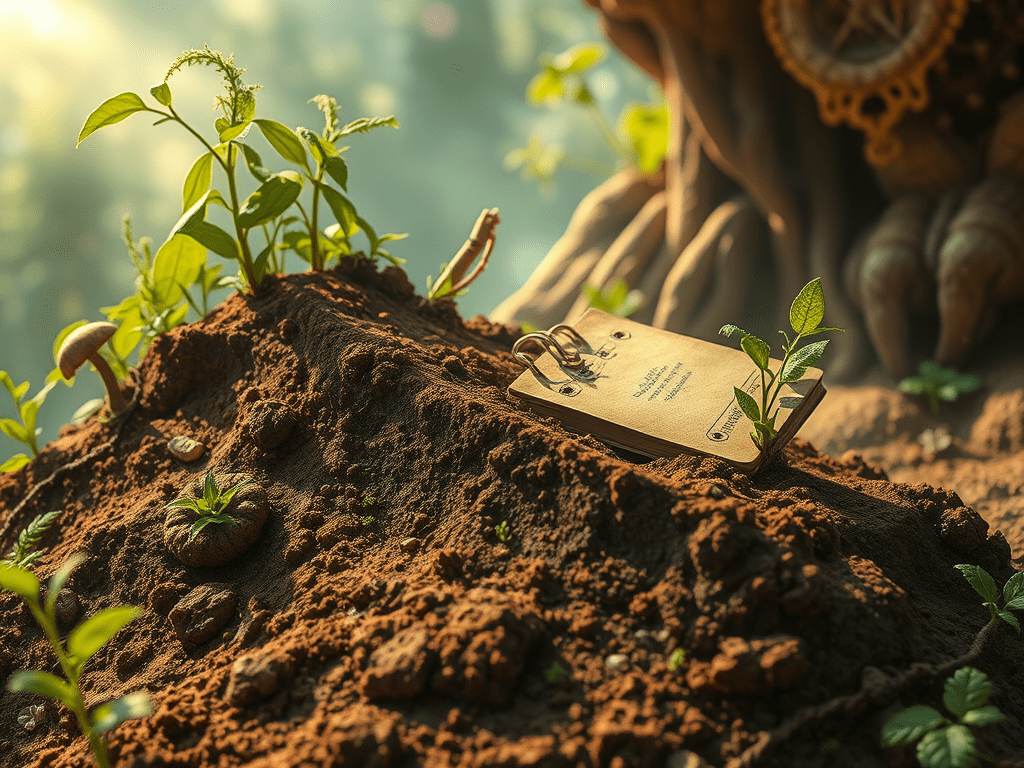
Soilcraft is the applied science and cultural philosophy of soil memory, land-based literacy, and bioecological stewardship. It is both a discipline and a responsibility — honoring the deep intelligence stored in the earth.
What Makes Soil an Archive?
- It retains generational memory: nutrients, trauma, growth, decay.
- It transmits legacy via terpenes, fungi, and microbiomes.
- It offers maps to healthier ecosystems — if we can read its language.
Soilkeeper’s Metrics
Chroniclers learn to evaluate soil not just for grow potential, but for narrative significance. Metrics include:
- Terroir Trace: Storylines embedded in regional identity.
- Microbiome Continuity: Fungal and microbial patterns with historical consistency.
- Legacy Inputs: Compost, amendments, and traditions passed down generationally.
Cultural Dimensions of Soilcraft
Soil is not just matter — it is memory. Indigenous frameworks, particularly Choctaw land teachings, inform our approach. The ledger is not a spreadsheet; it’s a living document of what the land has carried, fed, and endured.
Applications in Practice
- Soil Stories: Crafting brand narratives tied to cultivation region and soil profile.
- Legacy Mapping: Documenting the story of farms, compost practices, and water memory.
- Certification Pathways: Proposing criteria for “soil legacy verified” cannabis.
Reflection Prompts
- What stories are embedded in your soil?
- What rituals or amendments are passed down in your cultivation practice?
- How might your soil literacy guide your marketing, product development, or storytelling?
Key Takeaway
Soil remembers. By practicing Soilcraft, brands don’t just grow plants — they grow narrative ecosystems rooted in ancestral continuity, environmental respect, and regenerative storytelling.

 Chronicler Cannabis Historians
You must be logged in to post a comment.